
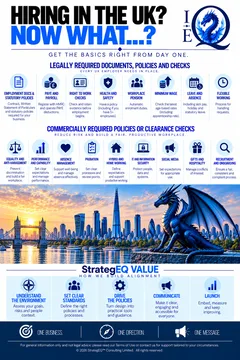
Hiring in the UK: Employer Essentials from Day One
Hiring your first UK employee creates more than a recruitment requirement. It creates an employer.
More than twenty years in People leadership has taught me that People challenges rarely sit neatly in one box. Growth affects structure. Structure affects leadership. Leadership affects performance, reward, retention and risk.
StrategEQ Insights distils the patterns, lessons and emerging issues I see across companies at different stages of growth and change. Each Insight turns a complex question into clear commercial context and practical action.
No theory for theory’s sake. Just straightforward thinking to help companies make better People decisions, earlier.
Showing 31 insights
Hiring your first UK employee creates more than a recruitment requirement. It creates an employer.
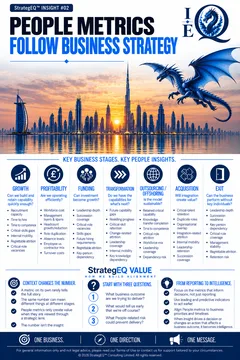
Different goals. Different questions. Better decisions.
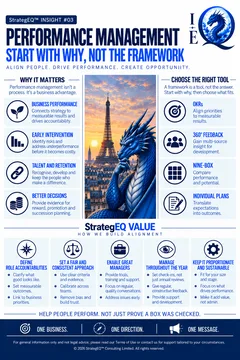
Performance management should improve performance. The methodology should never be the starting point.
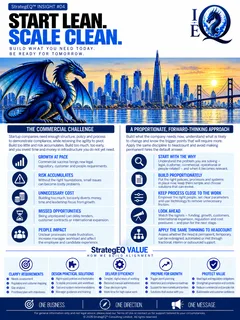
Build what the company needs now, understand what is likely to change and know the trigger points that will require something more.
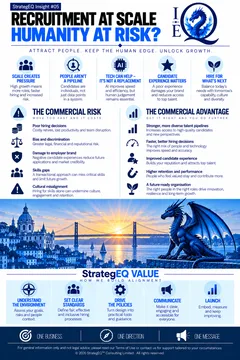
AI can make recruitment faster, more consistent and easier to scale. Automate the process. Not the relationship.
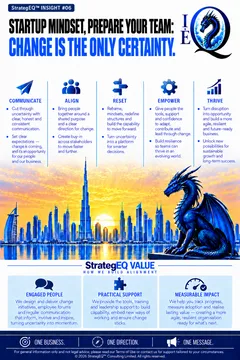
Positions organisational change capability as a continuing discipline rather than a one-off programme.
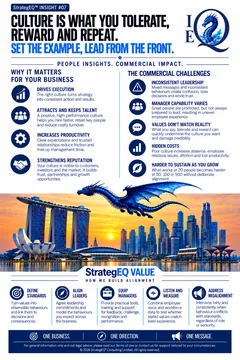
Explains how culture is created through what leaders demonstrate, reward, tolerate and challenge.
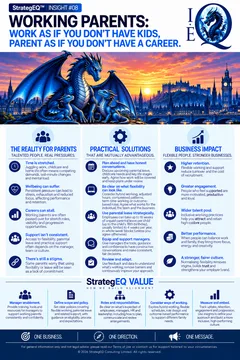
Work as if you don’t have kids, parent as if you don’t have a career.
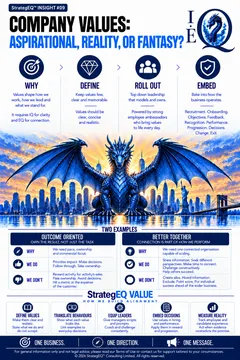
Company values are an operating model. If you are not ready to communicate them, stand by them and apply them, don’t do them.
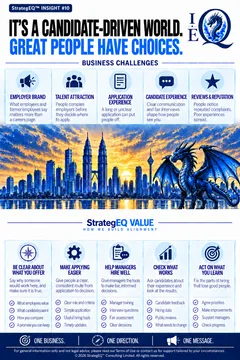
Explores why strong candidates choose one company over another and where attraction breaks down.
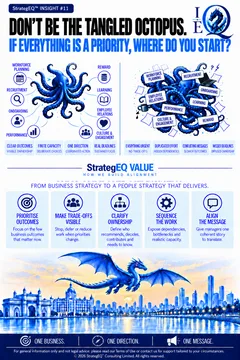
Uses the octopus metaphor to expose fast but fragmented growth and unclear alignment.
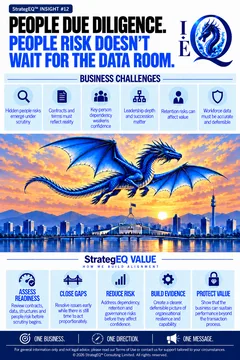
Explains why People evidence, liabilities and risks must be addressed before the data room opens.
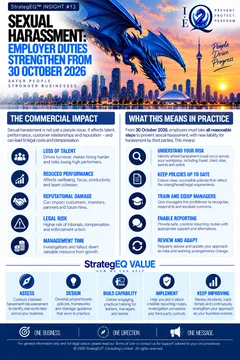
From 30 October 2026, the legal expectations on employers strengthen. A policy sitting in a folder is not an adequate prevention strategy.
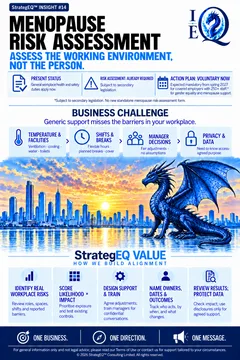
Shows why menopause support should start with workplace risk, practical adjustments and informed manager decisions.
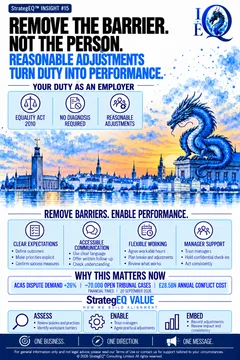
Focuses on removing process, communication and environmental barriers to neurodivergent capability.
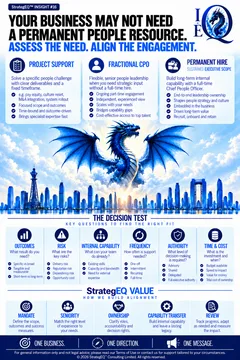
Helps companies assess whether project support, fractional leadership or a permanent People hire is the right fit.
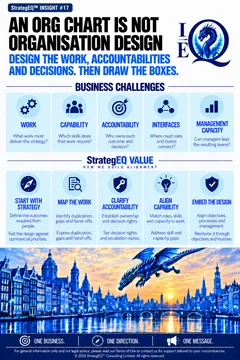
Distinguishes reporting lines from the accountabilities, capabilities and decisions needed to deliver strategy.
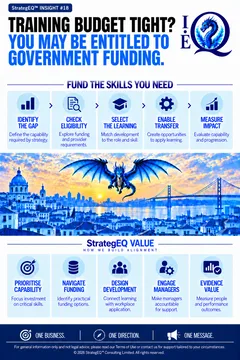
Shows companies how to use apprenticeships, bootcamps, levy transfers and other funded training routes.
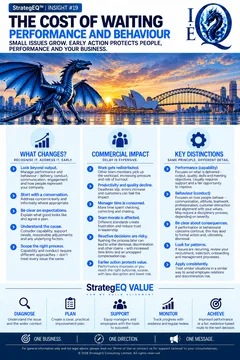
Underperformance rarely becomes expensive on the day somebody finally decides to address it. The cost builds during the weeks or months beforehand.
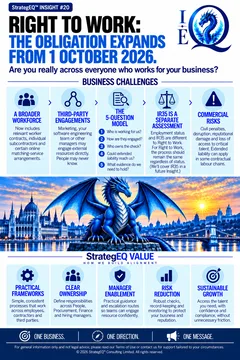
A process owned entirely by People cannot control engagements People never see.
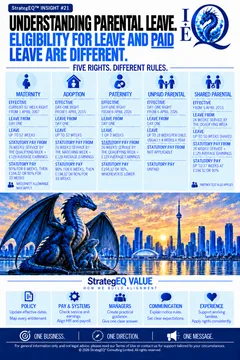
Clarifies the distinction between leave rights and separate statutory-pay eligibility requirements.
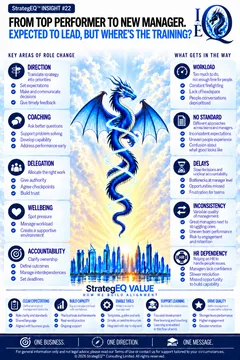
Explains how clear expectations, capacity, practical tools and focused development help new managers lead effectively.
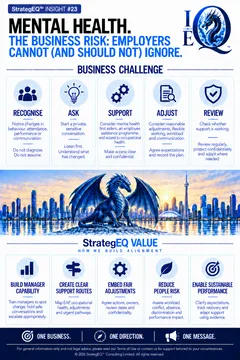
Connects hidden personal pressures with practical employer support, referral routes and manager capability.
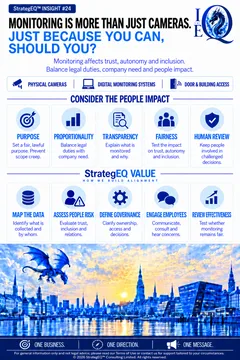
Balances business need with privacy, transparency, consultation and data-protection responsibilities.
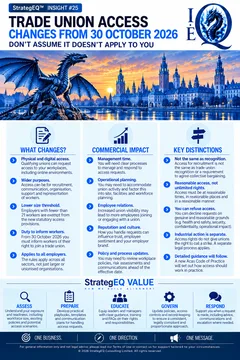
If you run a startup or scale-up that has never recognised a trade union, this may feel like legislation aimed at somebody else. That assumption could leave you unnecessarily exposed.
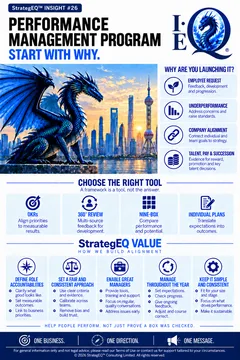
Connects People priorities and activity to company purpose, direction and commercial strategy.
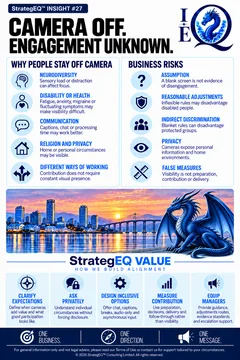
Explores why camera use is not a reliable measure of engagement and how inclusive expectations protect contribution.
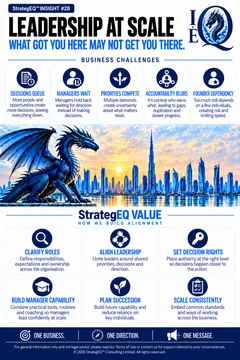
Explores how leadership capability must change as complexity, pace and headcount increase.
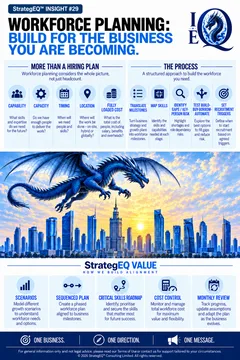
Shows how strategy should translate into future roles, skills, capacity, location and cost.
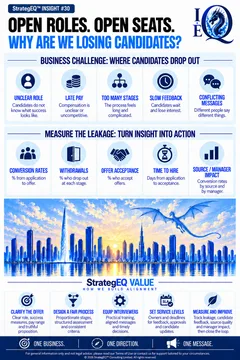
Identifies the proposition, process, pace and decision points that cause candidate loss.
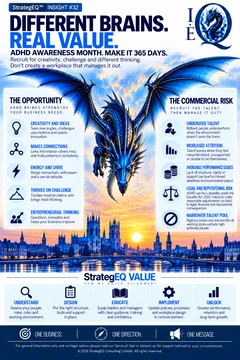
ADHD Awareness Month. Make It 365 Days.
Receive new StrategEQ Insights and practical perspectives by email.